Geotracking attacks: risks and safeguards
Geotracking technologies make it possible to track the location of a device or a person in real time. While this technology is used for legitimate purposes such as navigation or...
Geotracking technologies make it possible to track the location of a device or a person in real time. While this technology is used for legitimate purposes such as navigation or theft protection, it can also be misused for covert tracking. This article explains an attack scenario in which geotrackers disguised as everyday objects such as credit cards are used unnoticed, and shows the corresponding safeguards.
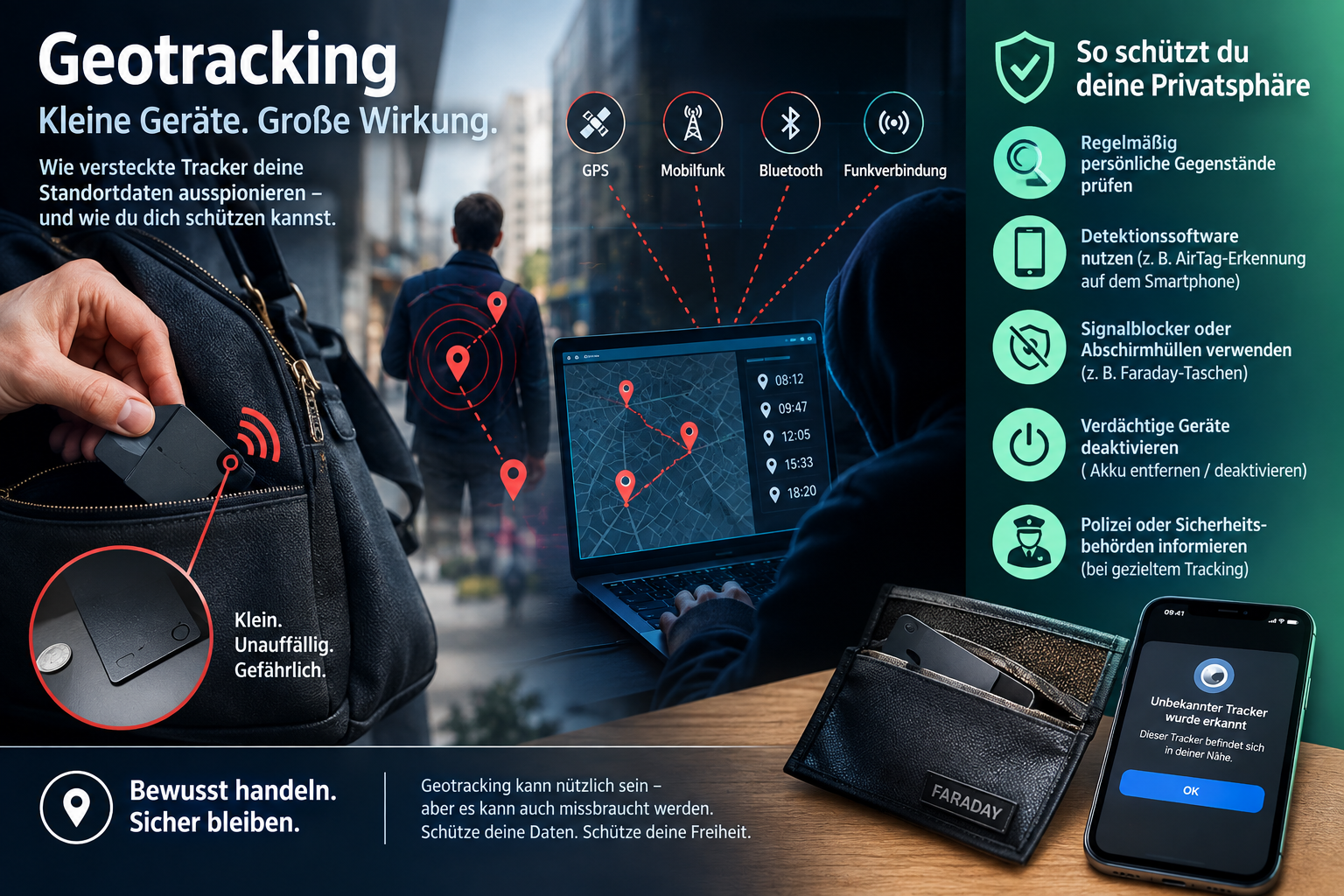
Attack scenario: location tracking with hidden geotrackers
Modern geotracking hardware is often small and inconspicuous and can easily be hidden in objects such as key rings, bags or even credit-card-sized form factors. Attackers use such devices to track people without them noticing.
How the attack works:
- The attacker secretly places a small GPS or Bluetooth tracker on the target person, for example in a bag or a car.
- The tracker regularly transmits location data to the attacker via mobile network, Bluetooth or a radio connection.
- The attacker can analyse the victim's movement patterns and possibly use them for criminal purposes, e.g. stalking or targeted burglaries.
Safeguards
To protect yourself against such attacks, you should take the following measures:
- Regularly check personal belongings: especially after meeting unknown people or being in public areas, bags, clothing and vehicles should be checked for suspicious objects.
- Use technical aids: some smartphones, iPhones in particular, can detect unknown AirTags or other Bluetooth trackers and alert the user.
- Use signal blockers or shielding cases: special Faraday bags can interrupt radio connections and prevent a tracker from sending data.
- Deactivate suspicious devices: if an unknown tracking device is found, it should be removed, have its battery taken out or be deactivated.
- Inform the police or security authorities: if targeted tracking is suspected, it should be reported to the authorities.
Conclusion
The possibility of tracking people unnoticed with hidden geotrackers is a serious threat to privacy. Modern miniature technologies allow attackers to place such devices inconspicuously and monitor movement patterns over long periods. By regularly checking personal belongings, using detection software and taking technical safeguards, users can protect themselves effectively against such attacks.