Encryption: the padlock in the browser and the Caesar trick
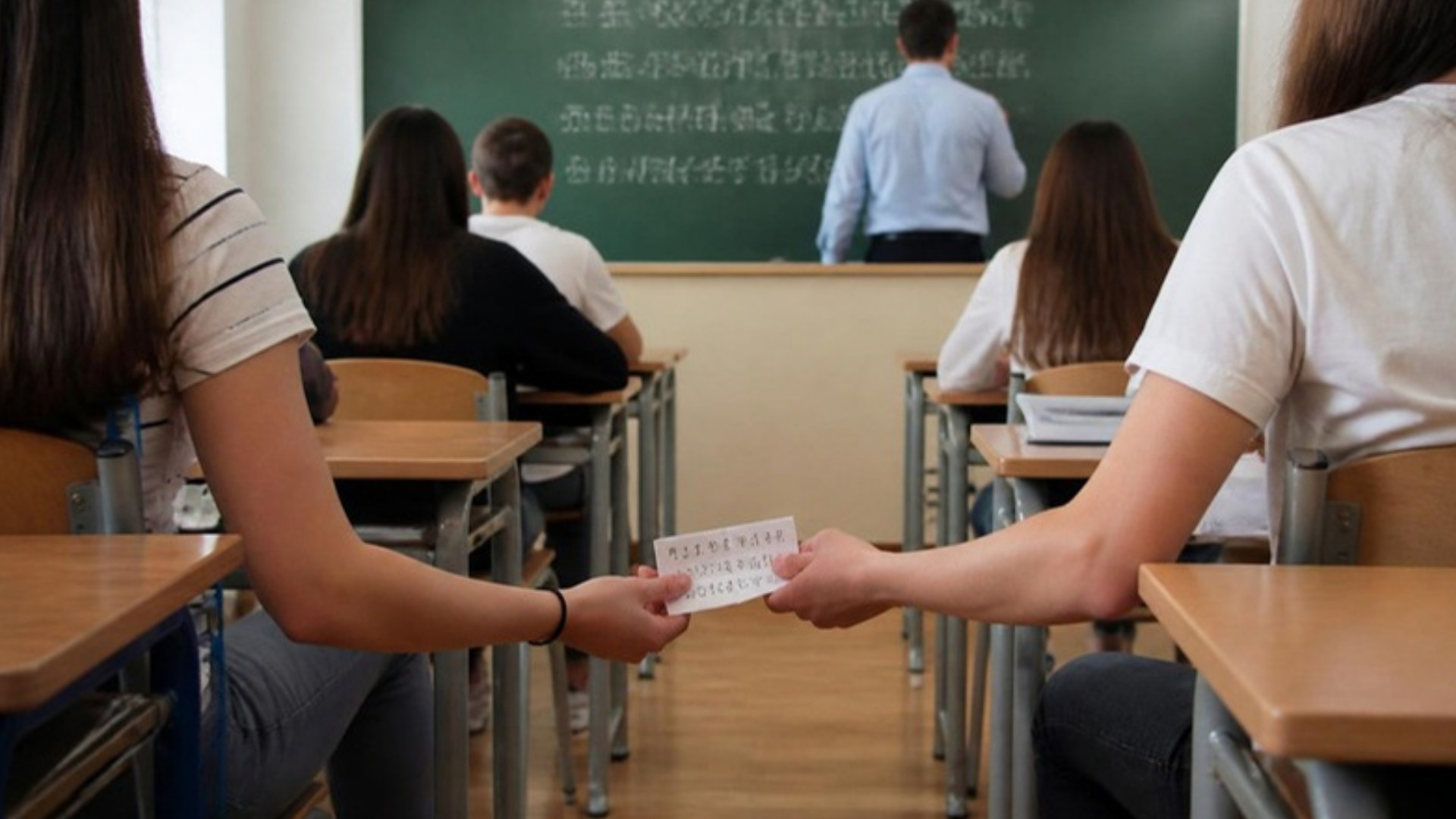
Why WhatsApp and the padlock in the browser protect you, what end-to-end means, and how you can encrypt and crack messages yourself with the Caesar trick.
Who is reading along?
Every message you send passes through dozens of strangers' computers: your Wi-Fi, the router in the café, the provider, servers somewhere in the world. Without encryption, any of them could read along, like with a postcard.
Encryption turns your text (the plaintext) into an unreadable ciphertext. Only someone with the matching key can make it readable again.
Encoding is not encryption. Anyone who knows the rule can translate a QR code or Morse code back. Encryption also needs a key that only the right people have.
Two kinds you use every day
Transport encryption: the padlock in the browser (the "https"). Between your phone and the website nobody can read along, not even on open Wi-Fi. But: the operator of the website sees everything you enter there.
End-to-end encryption: WhatsApp, Signal, Threema. The message is encrypted on your phone and only decrypted again on the recipient's phone. Not even the provider can read it.
No padlock in the browser, or the browser warns you about the site? Then never enter a password or bank details there. No matter how real the site looks.
The Caesar trick
Julius Caesar already encrypted messages: every letter is shifted along the alphabet by a fixed number. The key is that number.
With key 3, A becomes D, B becomes E, H becomes K:
Plaintext:  H E L L O
Ciphertext: K H O O R
Try it: encrypt your first name with key 3. At the end of the alphabet you carry on at the start, so X becomes A.
Why Caesar is useless today
There are only 25 possible keys. An attacker simply tries them all. That's called brute force: not clever, but fast. A computer manages it in less than a second.
It's even faster with frequency analysis: in English, E is the most common letter. So the most common letter in the ciphertext is very likely the shifted E, and the key is already known.
Exactly the same thing happens with short passwords: a computer tries every possibility. The more possible keys, the longer it takes. That's why long passwords and modern encryption with keys hundreds of digits long win.
You intercept the ciphertext **VHFXUH**. You know it's Caesar with key 3. What does it say?
Move every letter three places back: V→S, H→E, F→C, X→U, U→R, H→E. Anyone who knows the key can read along.
What is true?
More than one answer may be correct.
The padlock protects the route, not the site. End-to-end protects all the way to the recipient. Encoding without a key is not encryption, and 25 keys are tried out in seconds.
Where do you come across encryption in everyday life? One word is enough.